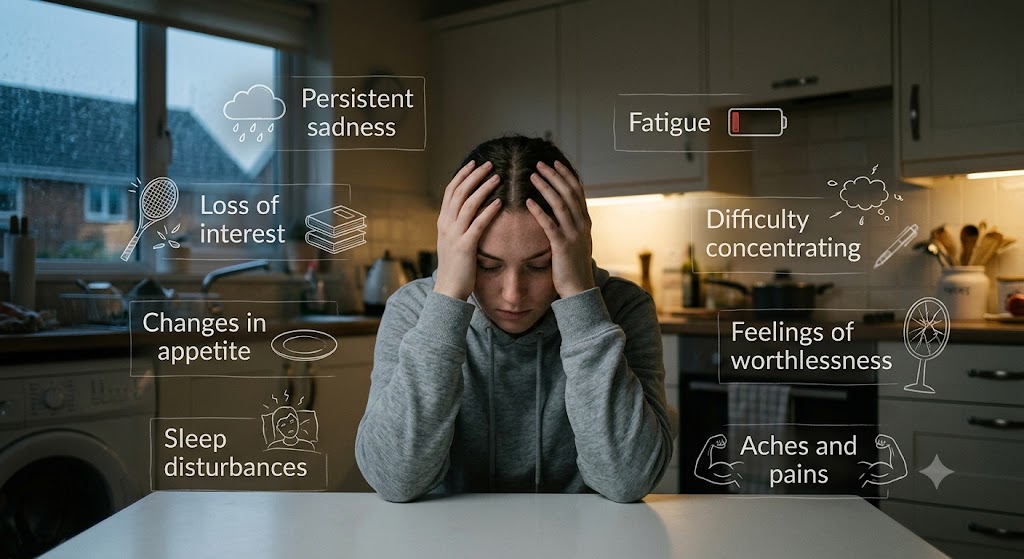
Understanding Depression Symptoms: Emotional, Physical, and Behavioral Signs Explained

Depression is more than feeling sad after a difficult day. It is a serious mental health condition that can affect every aspect of a person’s life, including emotions, physical health, relationships, and daily routines. For individuals struggling with addiction or working toward recovery, recognizing depression symptoms is especially important because untreated mental health concerns can interfere with lasting healing. Understanding the emotional, physical, and behavioral signs of depression allows individuals and their loved ones to seek support early and begin a path toward recovery with confidence.

What Are Depression Symptoms?

Depression symptoms extend far beyond changes in mood. They influence how people think, feel, and respond to everyday situations. Some symptoms develop gradually, making them easy to overlook, while others become more noticeable over time. Recognizing these changes is the first step toward receiving appropriate care.

Why Early Recognition Matters

Early intervention can improve treatment outcomes and reduce the impact depression has on daily life. It can also lower the risk of substance use relapse for individuals recovering from addiction. The sooner symptoms are identified, the sooner personalized treatment and healthy coping strategies can begin.

Emotional Signs of Depression

Emotional symptoms are often the most recognized aspects of depression, but they may not always appear as overwhelming sadness.

Persistent Feelings of Sadness or Emptiness

Many individuals experience an ongoing sense of emotional heaviness that does not improve with time. They may struggle to enjoy moments that once brought happiness or feel disconnected from family, friends, and personal goals.

Other emotional symptoms may include:

  • Hopelessness about the future
  • Feelings of guilt or worthlessness
  • Increased irritability or frustration
  • Emotional numbness
  • Frequent crying or feeling overwhelmed

These emotional changes can affect relationships, work performance, and overall quality of life.

Loss of Interest in Everyday Activities

Depression often causes people to withdraw from activities they once enjoyed. Hobbies, social gatherings, exercise, and even spending time with loved ones may begin to feel exhausting or meaningless.

Physical Symptoms of Depression

Depression is closely connected to physical health. Many people first notice physical symptoms before recognizing emotional changes.

Changes in Sleep and Energy

Common physical symptoms include:

  • Persistent fatigue
  • Low energy throughout the day
  • Difficulty falling asleep
  • Waking frequently during the night
  • Sleeping much more than usual

Even after a full night’s sleep, many individuals continue to feel physically exhausted.

Appetite and Physical Health Changes

Depression can also affect appetite and overall wellness.

Some individuals experience:

  • Increased appetite and emotional eating
  • Loss of appetite
  • Weight gain or weight loss
  • Frequent headaches
  • Muscle tension
  • Digestive discomfort

These symptoms may appear gradually and are often mistaken for unrelated medical conditions.

Behavioral Signs That Should Not Be Ignored

Behavioral changes are another important indicator of depression. They often affect routines, relationships, and recovery progress.

Withdrawal From Family and Friends

People experiencing depression frequently isolate themselves. They may cancel plans, avoid conversations, or lose interest in social activities because interacting with others feels emotionally draining.

Difficulty Managing Daily Responsibilities

Depression can make even simple tasks feel overwhelming.

Behavioral signs often include:

  • Missing work or appointments
  • Neglecting household responsibilities
  • Avoiding therapy or recovery meetings
  • Poor personal hygiene
  • Reduced motivation to complete everyday tasks

For individuals in addiction recovery, these behaviors can increase vulnerability to relapse if left untreated.

The Connection Between Depression and Addiction

Depression and substance use disorders commonly occur together. Some people begin using drugs or alcohol to cope with emotional pain, while others develop depression after prolonged substance use.

Because these conditions influence one another, treating only one issue often leaves the other unresolved. Comprehensive care that addresses both addiction and mental health provides the strongest foundation for lasting recovery.

The Benefits of Integrated Treatment

An individualized treatment plan may include:

  • Inpatient treatment for intensive support
  • Outpatient programs for continued flexibility
  • Individual counseling
  • Group therapy
  • Holistic wellness practices
  • Faith based counseling and spiritual support
  • Family education and involvement

Treating the whole person helps build emotional resilience while supporting physical, mental, and spiritual healing.

Practical Steps Toward Healing

If you recognize symptoms of depression in yourself or someone you care about, taking action early can make a significant difference.

Helpful steps include:

  • Monitor changes in mood, sleep, and energy.
  • Stay connected with supportive friends and family.
  • Maintain healthy daily routines.
  • Participate consistently in recovery programs if applicable.
  • Speak with a qualified mental health professional for an evaluation.

Remember that depression is a treatable condition, and asking for help is a sign of strength rather than weakness.

Conclusion: Understanding the Signs Can Lead to Lasting Recovery

Depression symptoms can affect every part of life, from emotions and physical health to behavior and decision making. Because these symptoms often develop gradually, they are easy to dismiss as stress or temporary exhaustion. However, recognizing them early creates opportunities for meaningful healing and lasting recovery.

Whether depression exists on its own or alongside addiction, compassionate and individualized treatment can help restore hope and improve overall well being. Through professional mental health care, holistic therapies, inpatient or outpatient treatment, and faith based support when desired, individuals can develop healthier coping skills and build a stronger future. Taking the first step toward help today can become the foundation for a healthier, more fulfilling tomorrow.


How Depression Symptoms Show Up in Stress, Addiction, and Everyday Life

Depression is often associated with persistent sadness, but the reality is much more complex. Many people living with depression continue to work, care for their families, and fulfill daily responsibilities while quietly struggling with symptoms that affect their emotional, physical, and mental well-being. For individuals facing chronic stress or recovering from addiction, depression can be even more difficult to recognize because its symptoms often overlap with other challenges. Understanding how depression symptoms appear in everyday life is a critical step toward seeking help, strengthening recovery, and improving overall quality of life.

Understanding the Connection Between Depression, Stress, and Addiction

Depression rarely exists in isolation. It frequently interacts with stress, anxiety, trauma, and substance use disorders. In many cases, one condition can contribute to the development or worsening of another.

How Chronic Stress Affects Mental Health

Stress is a normal part of life, but prolonged stress can significantly impact emotional well-being. When the body remains in a constant state of tension, it becomes harder to manage emotions, maintain motivation, and cope with challenges effectively.

Some common effects of chronic stress include:

  • Persistent fatigue
  • Difficulty concentrating
  • Increased irritability
  • Sleep disturbances
  • Feelings of overwhelm

Over time, these symptoms can begin to resemble depression, making it difficult to determine where stress ends and depression begins.

The Relationship Between Addiction and Depression

Many individuals struggling with addiction also experience depression. Sometimes people turn to substances in an attempt to cope with emotional pain, loneliness, or hopelessness. Unfortunately, substance use often worsens depression symptoms over time.

Alcohol and drugs can temporarily numb difficult emotions, but they can also disrupt brain chemistry, increase emotional instability, and make recovery more challenging. This is why integrated treatment that addresses both addiction and mental health is so important.

Emotional Signs of Depression in Daily Life

Depression affects much more than mood. It influences how individuals experience relationships, responsibilities, and personal fulfillment.

Loss of Interest in Everyday Activities

One of the most common symptoms of depression is a reduced interest in activities that once brought enjoyment.

Individuals may notice:

  • Less excitement about hobbies
  • Reduced motivation to socialize
  • Difficulty engaging in family activities
  • Feeling emotionally disconnected from important experiences

These changes often develop gradually, making them easy to overlook.

Persistent Feelings of Hopelessness

Depression frequently creates a negative emotional filter through which people view themselves and their future.

Common emotional experiences include:

  • Feeling discouraged about personal progress
  • Believing situations will never improve
  • Excessive self-criticism
  • Difficulty recognizing personal strengths

These thoughts can become especially damaging during addiction recovery if they are left unaddressed.

Physical Symptoms That May Signal Depression

Many people are surprised to learn that depression often appears through physical symptoms before emotional symptoms become obvious.

Changes in Energy and Sleep

Depression commonly affects energy levels and sleep patterns.

Individuals may experience:

  • Chronic fatigue despite adequate rest
  • Difficulty falling asleep
  • Frequent waking during the night
  • Sleeping significantly more than usual

Because these symptoms are physical, they are often blamed on work stress, aging, or other health conditions.

Appetite and Physical Discomfort

Depression can also affect appetite and physical health.

Possible symptoms include:

  • Loss of appetite
  • Increased emotional eating
  • Weight fluctuations
  • Headaches
  • Muscle tension
  • Digestive issues

When these symptoms persist, it is important to consider their connection to mental health.

How Depression Affects Decision Making and Daily Responsibilities

Depression can quietly interfere with a person’s ability to function effectively throughout the day.

Difficulty Concentrating

Many individuals experience cognitive symptoms such as:

  • Trouble focusing on conversations
  • Forgetfulness
  • Mental fog
  • Difficulty completing tasks

These challenges can affect work performance, recovery participation, and personal relationships.

Reduced Motivation

Even simple tasks may feel overwhelming when depression is present.

Examples include:

  • Delaying important responsibilities
  • Avoiding appointments or meetings
  • Struggling to maintain healthy routines
  • Neglecting self-care practices

For those in recovery, reduced motivation can increase vulnerability to relapse and emotional setbacks.

The Importance of Seeking Comprehensive Support

Depression symptoms should never be ignored, especially when they occur alongside addiction or chronic stress. Early intervention can prevent symptoms from worsening and provide individuals with effective tools for healing.

Benefits of Integrated Treatment

Comprehensive care often includes:

  • Inpatient treatment for structured support
  • Outpatient programs for ongoing guidance
  • Individual therapy
  • Group counseling
  • Holistic wellness practices
  • Faith-based support for those seeking spiritual growth

An individualized treatment plan allows each person to receive care that addresses their unique needs and circumstances.

Conclusion: Recognizing the Signs Is the First Step Toward Healing

Depression symptoms can appear in many forms, from emotional numbness and fatigue to difficulty concentrating and loss of motivation. When stress, addiction, and mental health challenges overlap, recognizing these symptoms becomes even more important. The earlier depression is identified, the sooner effective support and treatment can begin.

If you or someone you care about is experiencing symptoms of depression, do not wait for them to become overwhelming. Professional mental health care, addiction recovery services, holistic therapies, and compassionate support can make a profound difference. Healing is possible, and every step toward understanding your mental health is a step toward a healthier, more hopeful future.

Depression Symptoms That Are Easy to Miss: What You Should Know Before They Get Worse

Depression rarely begins with obvious warning signs. More often, it develops quietly through subtle emotional shifts, small changes in behavior, and physical symptoms that are easy to dismiss. For individuals navigating addiction recovery or managing ongoing stress and mental health challenges, these early signs can easily blend into everyday life. Recognizing depression symptoms early is essential, because when left unaddressed, they can intensify and make recovery more difficult. Understanding what to look for can help prevent worsening symptoms and support long term healing.

Why Depression Symptoms Are Often Overlooked

One of the biggest challenges with depression is that it does not always match common expectations. Many people assume depression always looks like severe sadness or inability to function. In reality, it often appears in quieter, less noticeable ways.

Gradual Emotional Changes

Depression usually develops slowly, which makes it harder to detect. Instead of a sudden shift, individuals may experience:

  • Slight but persistent loss of interest in activities
  • Feeling emotionally “off” without knowing why
  • Increased irritability over small issues
  • A general sense of disconnection or emptiness

Because these changes are gradual, they are often attributed to stress, fatigue, or life circumstances.

Masking Symptoms in Daily Life

Many individuals continue working, attending responsibilities, and maintaining relationships while experiencing depression. This can create the impression that everything is fine, even when internal struggles are present.

Emotional Depression Symptoms That Are Easy to Miss

Emotional symptoms are often the first signs of depression, but they can be subtle.

Low Level Emotional Shifts

Instead of intense sadness, depression may show up as:

  • Feeling less excited about things that used to bring joy
  • Emotional numbness or lack of strong feelings
  • Mild but persistent sadness that feels normal over time
  • Difficulty feeling motivated or emotionally engaged

These symptoms are often overlooked because they do not seem severe at first.

Increased Irritability and Sensitivity

Depression can also affect emotional reactions:

  • Becoming easily frustrated or overwhelmed
  • Reacting strongly to small stressors
  • Feeling emotionally drained after social interaction

These signs are frequently mistaken for stress or burnout.

Physical and Cognitive Symptoms People Overlook

Depression does not only affect emotions. It also influences the body and mind in ways that are often misunderstood.

Physical Symptoms That Seem Unrelated

Many physical signs of depression are mistaken for other issues:

  • Constant fatigue or low energy
  • Sleep disturbances such as insomnia or oversleeping
  • Headaches or muscle tension
  • Changes in appetite or digestion

Because these symptoms are physical, they are often treated separately instead of being linked to mental health.

Cognitive Changes That Affect Daily Thinking

Depression can also impact mental clarity:

  • Difficulty concentrating or staying focused
  • Forgetfulness or mental fog
  • Slower decision making
  • Negative or self critical thoughts

These symptoms can affect work performance, relationships, and recovery progress.

How Depression Symptoms Interact With Addiction and Stress

For individuals in recovery or under chronic stress, depression symptoms can be even harder to identify.

Overlap With Stress and Burnout

Stress can mimic many symptoms of depression, including fatigue, irritability, and difficulty concentrating. This overlap can lead people to assume they are simply overwhelmed rather than experiencing depression.

Connection With Substance Use

Some individuals may use substances to cope with emotional discomfort without realizing underlying depression is present. While this may provide temporary relief, it often worsens symptoms over time and creates a cycle that is difficult to break.

Why Early Recognition Matters

Recognizing depression symptoms early can significantly improve recovery outcomes and overall well being.

Preventing Symptom Escalation

When identified early, depression is more manageable. Treatment can help prevent symptoms from becoming more severe or disruptive.

Supporting Recovery Stability

For individuals in addiction recovery, untreated depression can increase the risk of relapse. Early intervention helps maintain emotional balance and supports long term stability.

Practical Steps to Take When You Notice Symptoms

If you begin to notice subtle changes in mood, energy, or thinking, taking early action can make a meaningful difference.

Pay Attention to Daily Patterns

Tracking sleep, mood, energy, and behavior can help identify consistent changes over time.

Stay Connected to Support Systems

Isolation often makes symptoms worse. Staying connected with supportive people can provide grounding and perspective.

Seek Professional Evaluation

Mental health professionals can help determine whether symptoms are related to depression, stress, or addiction related challenges. Early assessment leads to more effective care.

Explore Integrated Treatment Options

Effective care may include:

  • Inpatient programs for structured support
  • Outpatient treatment for ongoing flexibility
  • Individual therapy focused on emotional health
  • Group support for shared experience and accountability
  • Holistic approaches such as mindfulness, exercise, and nutrition
  • Faith based support for those seeking spiritual guidance

Conclusion: Small Signs Can Point to Bigger Needs

Depression symptoms are often easy to miss, especially when they develop gradually or overlap with stress and addiction recovery. However, these small changes in mood, energy, thinking, and behavior should not be ignored. They are important signals that something deeper may need attention.

When recognized early, depression is highly treatable, and recovery outcomes improve significantly. If you or someone you care about is noticing these subtle changes, reaching out for professional support can be a powerful step forward. With compassionate, individualized care and the right treatment approach, healing and stability are absolutely possible.

Depression Symptoms Explained: Understanding the Connection Between Stress, Addiction, and Mental Health

Depression is not an isolated condition. It often develops alongside stress, anxiety, and addiction, creating a complex emotional and psychological experience that can be difficult to understand without proper guidance. For many individuals, especially those in addiction recovery or struggling with ongoing mental health challenges, depression symptoms may be hidden beneath other issues. Recognizing how these conditions interact is essential for early intervention, effective treatment, and long term healing.

How Stress, Addiction, and Depression Are Connected

Stress, addiction, and depression are closely linked through how they affect the brain, emotions, and behavior. When one area becomes unbalanced, it can influence the others and create a cycle that becomes difficult to break.

The Role of Chronic Stress in Depression

Ongoing stress can gradually impact emotional health and lead to depression symptoms over time. This may include:

  • Persistent fatigue and emotional exhaustion
  • Difficulty concentrating or staying focused
  • Irritability or feeling overwhelmed easily
  • Sleep disturbances and restlessness

When stress becomes chronic, the body remains in a heightened state of tension, which can weaken emotional resilience and increase vulnerability to depression.

How Addiction and Depression Reinforce Each Other

Addiction and depression often exist together in what is known as a co-occurring disorder. Substance use may begin as a way to cope with emotional pain, but over time it can worsen depression symptoms.

Common patterns include:

  • Using substances to escape sadness or stress
  • Temporary relief followed by deeper emotional lows
  • Increased isolation and withdrawal from support systems
  • Difficulty experiencing pleasure without substances

This cycle can make recovery more challenging without integrated treatment.

Key Depression Symptoms to Understand

Depression symptoms can vary from person to person, but they often affect emotional, cognitive, physical, and behavioral functioning.

Emotional and Cognitive Symptoms

  • Persistent sadness or emotional heaviness
  • Loss of interest in activities once enjoyed
  • Negative thought patterns or self criticism
  • Difficulty making decisions or focusing
  • Feelings of hopelessness or emotional numbness

These symptoms often interfere with motivation and engagement in daily life and recovery programs.

Physical and Behavioral Symptoms

  • Low energy or chronic fatigue
  • Sleep issues such as insomnia or oversleeping
  • Changes in appetite or weight
  • Withdrawal from social interaction
  • Reduced participation in responsibilities or treatment

These signs are often mistaken for stress or recovery fatigue, but they may indicate underlying depression.

Why Depression Symptoms Are Often Missed

Depression does not always present in obvious ways. Many individuals assume their symptoms are temporary or related to external pressures.

Overlapping Symptoms With Stress and Addiction

Stress and addiction can mask depression symptoms, making it difficult to identify the root cause. For example:

  • Fatigue may be blamed on work or withdrawal
  • Irritability may be seen as stress response
  • Emotional numbness may be dismissed as burnout

Without proper assessment, depression can go untreated for long periods.

Gradual Development of Symptoms

Depression often develops slowly, with small changes building over time. Because of this gradual onset, individuals may not recognize when professional help is needed.

The Importance of Integrated Treatment

When depression, stress, and addiction occur together, integrated care is the most effective approach. Treating only one aspect of the condition often leads to incomplete recovery.

Comprehensive Treatment Options

Effective care may include:

  • Inpatient treatment for structured stabilization and support
  • Outpatient programs for ongoing flexibility and therapy
  • Individual counseling to address emotional and behavioral patterns
  • Group therapy for shared experience and connection
  • Holistic approaches such as mindfulness, exercise, and nutrition support
  • Faith based support for individuals seeking spiritual grounding

Integrated care helps address the full scope of emotional and behavioral challenges.

Practical Steps to Manage Symptoms and Seek Help

Early action can significantly improve recovery outcomes and emotional stability.

Build Awareness Through Self Monitoring

Tracking mood, energy, sleep, and behavior can help identify patterns that may signal depression.

Strengthen Support Systems

Support from trusted individuals can reduce isolation and encourage healthier coping strategies. This may include friends, family, support groups, or recovery communities.

Seek Professional Guidance Early

Mental health professionals can help identify whether symptoms are related to depression, stress, addiction, or a combination of factors. Early intervention leads to more effective treatment planning.

Conclusion: Understanding Leads to Healing

Depression symptoms are often deeply connected to stress and addiction, creating a cycle that can feel overwhelming without proper support. However, understanding these connections is a powerful first step toward recovery. When symptoms are recognized early and treated through compassionate, integrated care, individuals can regain stability, clarity, and emotional balance.

If you or someone you care about is experiencing symptoms of depression alongside stress or addiction, reaching out for professional help can make a meaningful difference. With the right combination of inpatient care, outpatient support, and holistic treatment, long term healing is not only possible but achievable.