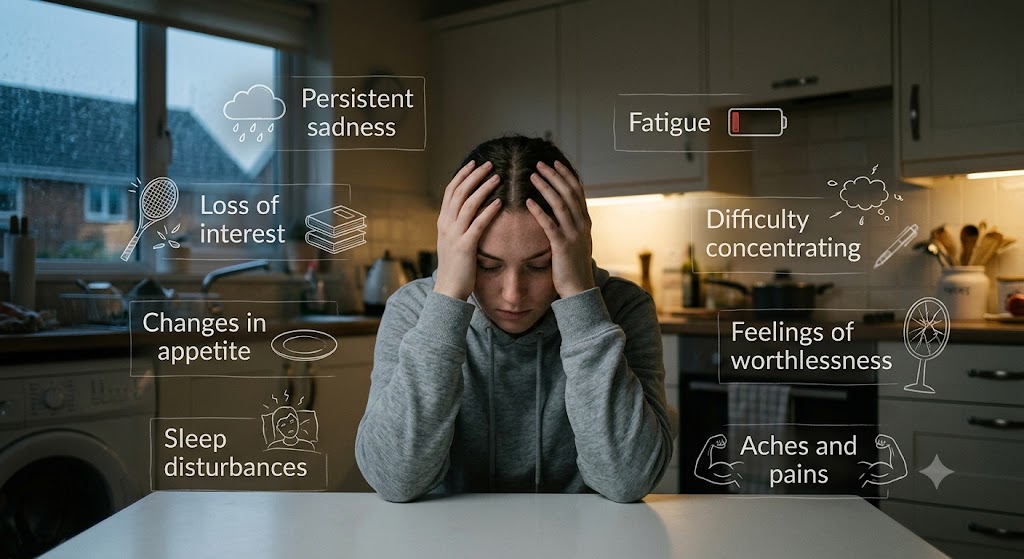
Depression is more than feeling sad after a difficult day. It is a serious mental health condition that can affect every aspect of a person’s life, including emotions, physical health, relationships, and daily routines. For individuals struggling with addiction or working toward recovery, recognizing depression symptoms is especially important because untreated mental health concerns can interfere with lasting healing. Understanding the emotional, physical, and behavioral signs of depression allows individuals and their loved ones to seek support early and begin a path toward recovery with confidence.
What Are Depression Symptoms?
Depression symptoms extend far beyond changes in mood. They influence how people think, feel, and respond to everyday situations. Some symptoms develop gradually, making them easy to overlook, while others become more noticeable over time. Recognizing these changes is the first step toward receiving appropriate care.
Why Early Recognition Matters
Early intervention can improve treatment outcomes and reduce the impact depression has on daily life. It can also lower the risk of substance use relapse for individuals recovering from addiction. The sooner symptoms are identified, the sooner personalized treatment and healthy coping strategies can begin.
Emotional Signs of Depression
Emotional symptoms are often the most recognized aspects of depression, but they may not always appear as overwhelming sadness.
Persistent Feelings of Sadness or Emptiness
Many individuals experience an ongoing sense of emotional heaviness that does not improve with time. They may struggle to enjoy moments that once brought happiness or feel disconnected from family, friends, and personal goals.
Other emotional symptoms may include:
- Hopelessness about the future
- Feelings of guilt or worthlessness
- Increased irritability or frustration
- Emotional numbness
- Frequent crying or feeling overwhelmed
These emotional changes can affect relationships, work performance, and overall quality of life.
Loss of Interest in Everyday Activities
Depression often causes people to withdraw from activities they once enjoyed. Hobbies, social gatherings, exercise, and even spending time with loved ones may begin to feel exhausting or meaningless.
Physical Symptoms of Depression
Depression is closely connected to physical health. Many people first notice physical symptoms before recognizing emotional changes.
Changes in Sleep and Energy
Common physical symptoms include:
- Persistent fatigue
- Low energy throughout the day
- Difficulty falling asleep
- Waking frequently during the night
- Sleeping much more than usual
Even after a full night’s sleep, many individuals continue to feel physically exhausted.
Appetite and Physical Health Changes
Depression can also affect appetite and overall wellness.
Some individuals experience:
- Increased appetite and emotional eating
- Loss of appetite
- Weight gain or weight loss
- Frequent headaches
- Muscle tension
- Digestive discomfort
These symptoms may appear gradually and are often mistaken for unrelated medical conditions.
Behavioral Signs That Should Not Be Ignored
Behavioral changes are another important indicator of depression. They often affect routines, relationships, and recovery progress.
Withdrawal From Family and Friends
People experiencing depression frequently isolate themselves. They may cancel plans, avoid conversations, or lose interest in social activities because interacting with others feels emotionally draining.
Difficulty Managing Daily Responsibilities
Depression can make even simple tasks feel overwhelming.
Behavioral signs often include:
- Missing work or appointments
- Neglecting household responsibilities
- Avoiding therapy or recovery meetings
- Poor personal hygiene
- Reduced motivation to complete everyday tasks
For individuals in addiction recovery, these behaviors can increase vulnerability to relapse if left untreated.
The Connection Between Depression and Addiction
Depression and substance use disorders commonly occur together. Some people begin using drugs or alcohol to cope with emotional pain, while others develop depression after prolonged substance use.
Because these conditions influence one another, treating only one issue often leaves the other unresolved. Comprehensive care that addresses both addiction and mental health provides the strongest foundation for lasting recovery.
The Benefits of Integrated Treatment
An individualized treatment plan may include:
- Inpatient treatment for intensive support
- Outpatient programs for continued flexibility
- Individual counseling
- Group therapy
- Holistic wellness practices
- Faith based counseling and spiritual support
- Family education and involvement
Treating the whole person helps build emotional resilience while supporting physical, mental, and spiritual healing.
Practical Steps Toward Healing
If you recognize symptoms of depression in yourself or someone you care about, taking action early can make a significant difference.
Helpful steps include:
- Monitor changes in mood, sleep, and energy.
- Stay connected with supportive friends and family.
- Maintain healthy daily routines.
- Participate consistently in recovery programs if applicable.
- Speak with a qualified mental health professional for an evaluation.
Remember that depression is a treatable condition, and asking for help is a sign of strength rather than weakness.
Conclusion: Understanding the Signs Can Lead to Lasting Recovery
Depression symptoms can affect every part of life, from emotions and physical health to behavior and decision making. Because these symptoms often develop gradually, they are easy to dismiss as stress or temporary exhaustion. However, recognizing them early creates opportunities for meaningful healing and lasting recovery.
Whether depression exists on its own or alongside addiction, compassionate and individualized treatment can help restore hope and improve overall well being. Through professional mental health care, holistic therapies, inpatient or outpatient treatment, and faith based support when desired, individuals can develop healthier coping skills and build a stronger future. Taking the first step toward help today can become the foundation for a healthier, more fulfilling tomorrow.