Depression, does it destroys relationship?

Depression is an illness that can take a toll on an individual’s life, but it can also have a significant impact on relationships between two people. It is a difficult and misunderstood condition that can threaten even the closest of relationships. When a person is suffering from depression, even the simplest task can seem monumental. This could mean lacking energy to maintain relationships, including those with partners, friends and family. While there is no single cause of depression, it can occur due to a variety of factors such as biological, environmental and psychological. Depression can also cause feelings of hopelessness, worthlessness and other symptoms that can significantly affect a person’s ability to interact with others and can lead to damaging effects on relationships.

Depression Changes Personalities

Depression can cause vast changes in someone’s outlook and behavior. People affected by depression may feel exhausted even after a small amount of activity and appear withdrawn. They may also show signs of irritability and lack the motivation to do things they once enjoyed. This can lead to problems in relationships. People with depression tend to become very sensitive to words or actions of their partners and are prone to misinterpretation and conflict. They also may have difficulty in communicating effectively with their partners, ultimately leading to confusion and increasing levels of frustration with those around them.

It Can Bring Negative Emotions

Depression can also cause a person to feel a range of negative emotions, such as sadness, anger, hopelessness and desolation. This can create tension and even hostility in relationships with long-term partners or family members. These outbursts can damage relationships and make communication more difficult, as the underlying cause of this behaviour is often not recognised by those affected. People with depression may also feel ashamed of their condition and fear the judgement of close partners, which can further strain relationships.

Lack Of Intimacy

Depression can also cause a decrease in intimate relationships, which can have drastic effects on both parties. Spending more time alone and exhibiting a lack of energy or interest in relationships can result in complete detachment from partners. This could mean a person won’t show affection nor initiative in sexual activities, and may cause feelings of distant and lack of intimacy in a relationship.

It Can Cause Lying

Depression can cause people to lie in attempt to protect their partners from their negative emotions. They may try to hide their feelings of sadness from their significant others and may express a false sense of happiness. This often leads to further feelings of guilt, shame and loss as this could serve as a form of self-sabotage, preventing communication and understanding within a relationship.

Reaching Out For Help

Depression cannot ruin a relationship. However, it can be damaging if it’s left untreated. Seeking help and support in order to manage depression can be a vital step in helping individuals as well as their partners in overcoming the symptoms of the illness. Some steps a person can take to help a partner suffering from depression include learning as much as possible about the condition, offering emotional support and being patient and understanding. Mental health professionals, such as counsellors and psychiatrists, can also be of great assistance in helping people to manage depression and prevent it from having a negative impact on their relationships.

Conclusion

People with depression and those close to them may feel overwhelmed due to its manifestations. Depression can be damaging to relationships if not addressed, however, with the right help and support, individuals can work together and learn to cope with the symptoms of the illness. With time, patience, and understanding, relationships can become stronger and healthier.

Depression & Relationships: Navigating the Impact on Personal and interpersonal wellbeing

Depression is a chronic mental health condition that affects not only the person experiencing it but also their relationships and overall well-being. Knowing the ways in which depression can impact these areas is vital for providing support and seeking suitable treatment.

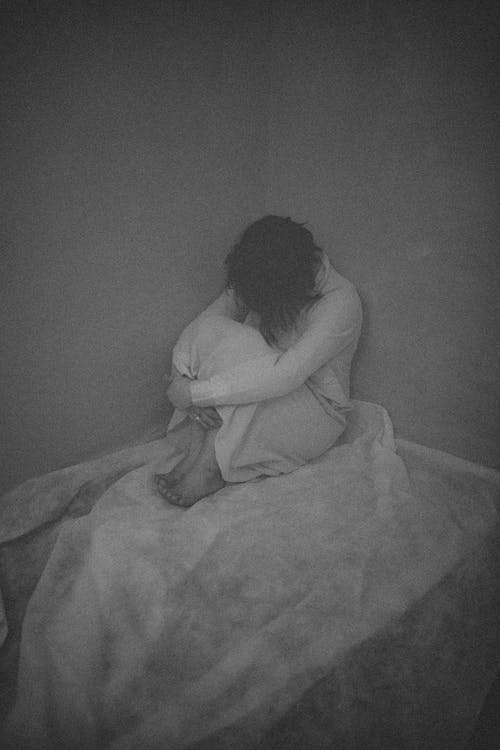
Free Photo Of Woman Sitting On Floor Stock Photo

Below are some ways depression can affect relationships and well-being.

Emotional Withdrawal

Depression often causes emotional withdrawal, making individuals feel detached and emotionally distant from their family and friends. The lack of emotional connection can affect relationships, leading to conflicts, misunderstandings, feelings of rejection, and a sense of isolation.

Difficulties in Communication

Depression often makes communication challenging. Individuals might struggle to express their emotions, thoughts, and needs effectively. This breakdown in communication can prevent understanding, leading to miscommunication and creating tension within relationships.

Loss of Interest and Pleasure

Depression can rob individuals of their ability to be joyful and derive pleasure in activities they once enjoyed. This can result in a lack of engagement, interest, and enthusiasm in shared activities, thereby reducing the quality of interactions and creating a sense of disconnect in relationships.

Increased Conflict and Tension

Depression can contribute to increased conflict and tension in relationships. Negative thoughts and feelings connected with depression, such as irritability, sadness, and anger, can lead to arguments, misunderstandings, and strained relationships between partners, friends, and family members.

Neglected Self-Care and Wellbeing

Depression often causes individuals to be negligent when it comes to self-care routines, such as exercise, healthy eating, and sufficient sleep. This neglect can lead to a decline in physical health and overall well-being, further impacting relationships as the individual’s ability to provide support and engage in activities may be compromised.

Depression can have far-reaching effects on relationships and overall well-being. Recognizing and understanding these impacts is crucial in supporting individuals experiencing depression.

It is important to seek professional help, practice open and compassionate communication, and prioritize self-care to reduce the negative effects of depression and nurtu healthier relationships and improved well-being.

What Is Depression?

Depression is a common mental illness characterized by persistent sadness, hopelessness, low energy, and lack of interest in activities. It usually affects how an individual acts and his/her feelings, thinking, and behavior. Individuals with depression find it hard to cope with the everyday activities of life. It can range from mild to extreme, with severe cases sometimes resulting in suicidal thoughts.

Depression does not discriminate, it affects individuals of all ages, genders, and cultural backgrounds. In the US alone, it is estimated that 16 million adults are affected by depression every year.

There are several types of depression, but all share a common set of symptoms. These may include:

– Persistent feelings of sadness, irritability, and/or hopelessness

– Lack of energy and lack of interest in activities
– Sleep problems (trouble falling or staying asleep, sleeping too much)

– Appetite or weight changes
– Difficulty concentrating or making decisions
– Feelings of guilt or worthlessness
– Loss of pleasure or interest in activities once enjoyed
– Thoughts of suicide

The exact cause of depression is still largely unknown, and researchers are continuously searching for a better understanding of this mental health disorder. It is known to be a combination of biological, psychological, and environmental factors.

Biological factors can include differences in the structure of the brain, particularly in areas responsible for regulating mood and emotions. Neurotransmitters, such as serotonin and norepinephrine, can play a role in the development of depression as well.

Psychological factors such as life changes or stressful events are also common triggers of depression. This could include a major life event, such as death or divorce, or continuing stressful situations, such as unemployment or poverty.

Environmental factors like early childhood trauma or abuse, a lack of social support, and substance abuse can also play a role.

Although depression is often believed to be an individual experience, it can occur during family and relationship distress. It can also result from changes in family dynamics or even as a result of grief or loss.

Treatments for depression are often tailored to the individual. The traditional treatments for depression involve a combination of therapy and medication. Some alternative treatments are now available as well, such as light therapy and acupuncture.

Living with depression can be a challenging and sometimes isolating experience. Fortunately, there are steps that can be taken to manage and cope with the symptoms of depression. These may include:

– Exercising regularly
– Eating well and maintaining a healthy diet
– Practicing relaxation techniques, such as meditation or yoga
– Accepting help from family and friends
– And seeking professional help from a doctor or therapist

Depression can be a difficult and complex disorder to deal with, but it can be treated. Remember that you are not alone; millions of people struggle with depression on a daily basis. With the proper diagnosis and treatment, it is possible to manage the symptoms and to lead a healthy and fulfilling life.

What are the effects of depression

One of the most common mental health problems is depression. If depression is left untreated, it can cause some unpleasant effects that the individual might not even be aware of.

Therefore, identifying the effects of depression is quintessential to helping people treat and manage the basic symptoms better. Here are some of the effects of depression.  

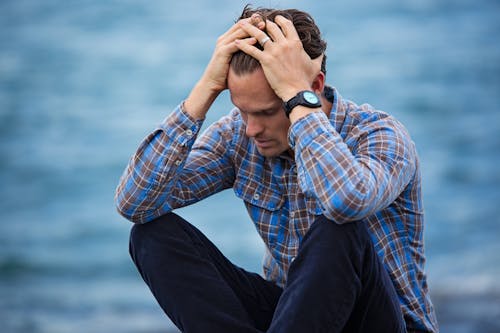
Free Man in Blue and Brown Plaid Dress Shirt Touching His Hair Stock Photo

Altered sleep patterns

When you are depressed, you are likely not to have a stable sleeping pattern. This means that you can be struggling with insomnia for a long time, and all of a sudden, you begin to find ways to manage excessive sleeping.

The abrupt variation in your sleeping patterns is likely to hurt different aspects of your life, particularly your physical and mental health.

Loss of appetite/Excessive eating

Another effect of depression is the abnormal eating habits that come with it. When some people are depressed, they might experience a loss of appetite. They will not feel like eating anything including their most preferred meal.

You will discover that they only eat once in a while, and it might affect their physical appearance. On the other hand, some people suffer from excessive eating.

This means that some people eat a lot to the point where they gain excessive weight and become obese. Both loss of appetite and excessive eating cause nutritional imbalance in the body that can worsen your health.

Inability to concentrate

Depression makes it impossible for you to concentrate on important things that matter because you are overwhelmed with the grave and complicated feelings of sadness. This means that you are likely to be less productive in these areas because your mind is not there.

Abhorrence for social gatherings

Many depressed individuals loathe social gatherings because it makes no meaning to them at that point. Hence, they will prefer to keep to themselves and avoid any possibility that can make them hang out with other people.

If you notice some of the signs or effects of depression, it is important to seek help from a professional mental health therapist.

Importance of counseling in treating depression

Depression is a grave mood disorder that many people suffer from. When depression is in play, it can affect your emotions, thoughts, and feelings.  

It can also prevent you from living a balanced life because your mind would be fixated on your sad feelings.

When you are depressed, you will lose interest in things that mattered to you. Additionally, you will avoid public places because you don’t want anyone to talk to you.

Similarly, you are likely to avoid receiving support and love because you feel that no one genuinely understands what you are experiencing.

Free Woman Looking at Sea While Sitting on Beach Stock Photo

The good news is, that no matter how complicated an individual’s depression might be, there is a solution.

Often, it begins with counseling. Here are some of the perks of counseling in treating depression

Understanding the root cause of the depression

One of the reasons why many depressed people cannot seek help is because they cannot really be identified how their depression came to be.

Apart from those whose depression was a result of grief and loss, some people don’t know how their depression developed.

With proper counseling, you will be able to tell the origin of your depression. This way, it would be easier to create a treatment plan for your depression.

Therapeutic support and alliance

Another importance of counseling in treating depression is the therapeutic support and alliance that counselors provide.

Counselors are aware that most depressed individuals don’t have the needed support, care, and love to help them get better.

Hence, providing this needed support from the professional angle sits well with most people.

When a patient receives therapeutic support and alliance, it would be easy for them to follow through with treatment.

If you are depressed or you know someone around you suffering from depression, encourage them to seek help by seeing a counselor.

This is the primary step they need for a smooth recovery, that will allow them to become more productive in other aspects of their lives.

CAUSES OF DEPRESSION

Depression is a very complex disease and no one knows the singular cause for it. However, there are various reasons why depression can occur.

For some people, it is when they get hit with chronic medical conditions that they become depressed.

For others, it is when they experience a big transition in life that they become depressed. It could be the death of a loved one, or the loss of a profitable business venture.

There are also some people whose family has a history of depression, so there is a big chance that they might be depressed too.

Abuse is one of the factors that might constitute the depression of an individual. If the person was subjected to sexual or emotional abuse in the past. There is a chance that they could slip up into depression in the future.

In addition, the use of some drugs have the chance to cause depression.

This is why people are often advised not to self-medicate if they have health problems. Rather, they should reach out to their healthcare provider on the right drugs to take.

For an individual who has biological vulnerability, there is a chance for depression to occur if the person experiences conflicts with family members or friends.

Also, someone who experiences intense pain from the death of a loved one might not find it easy to escape depression. In this case, the chances are very high that the person would experience mild signs of depression.

As mentioned above, if the family of an individual has a history of depression, then the risk is increased. Depression is a complex trait, which is an end-constituents of the small effects of various genes.

It would even interest you to know that, even good events can make someone depressed. If someone is graduating, getting a new job, a salary range, there is a chance for depression to slip in.

It is advised that when you experience feelings of sadness for a period longer than usual, you should reach out to your healthcare provider for help.

TREATING DEPRESSION

Depression is a mood disorder and it could be explained as having feelings of anger, loss and sadness that disrupts an individual’s daily activities.

Depression can be experienced in diverse ways, it could affect your productivity at work, which makes you lose ample time.  

Depression also has the capacity to affect your relationship with other people and cause some severe health problems. Feeling sad and moody is normal, because sad occurrences happen to everyone.

However, if these sad feelings are more frequent than usual, then there is a huge tendency that you might be dealing with depression.

Depression gets worse when there is no proper treatment in place. It would interest you to know that people who seek treatment often see positive signs in a matter of weeks.

It is challenging for an individual to live with depression, but undergoing treatment has the tendency to turn your life around.

This is why you need to reach out to your healthcare provider to see the possible options suited for your case. You might need to combine treatment or use a single one depending on what your healthcare provider prescribes.

Usually, healthcare providers would recommend either medications, psychotherapy, light therapy and alternative therapies.

For medications, you might need to take antianxiety drugs, antidepressants and antipsychotic medications.

For psychotherapy, you would need to discuss with a therapist who doubles as a counselor, and you will be taught skills that would assist you to handle negative feelings. You might also need to attend group and family therapy sessions.

During depression treatment, individuals are often advised to exercise regularly. The reason for this is, exercise has the capacity to increase the production of endorphins in your body, and these are the hormones that step-up your mood.

Also, if you abuse substances like drugs and alcohol, you would need to stop. These substances have the huge tendency to make your depression symptoms worse than before.

It is also important to take care of yourself based on the recommendation of your healthcare provider.

SIGNS OF DEPRESSION

When you feel down from time to time, it can be regarded as a normal feeling of life. However, when certain emotions such as despair and hopelessness set in, and refuse to leave, then it can be said that depression is currently in play.

Asides the fact that sadness which comes because life’s struggles is not dealing fine with you, depression has the capacity to change your thoughts pattern, and how you carry about daily life activities.

Depression can affect the way you sleep, eat, talk, study and the likes. It would be difficult for the individual to effectively cope with the daily life. A good number of people refer to depression as having to reside in a black hole, alongside with being empty and lifeless.

When depression is not treated, it has the capacity to cause a severe health condition which could be life threatening. It is also essential to bear in mind that, the feelings of despair and hopelessness are just the symptoms which comes with depression, and not the actuality of your situation.

Hence, no matter how hopeless you may feel, it is a relief to know that, you can always get better. When you understand the reason for your depression, and you are aware of the symptoms which comes with it, the basic steps to getting better and combatting the problem can be taken.

Basically, someone who is depressed would feel hopeless and helpless. There would be a lonely outlook, as there is a feeling that there is nothing which can be done to change to step-up your situation.

In addition to this, someone who is depressed would not be interested in the regular day-to-day activities. There would be no interest in social activities and the likes. The joy and pleasure which comes with those activities would be absent.

There would also be appetite or weight changes, which would be very significant. The individual would also be unable to sleep properly, as he or she would be waking up and sleeping at odd hours of the day.

Anger would also set in, alongside with being irritated from time to time. People who are depressed should be promptly catered for, as they could be contemplating committing suicide.

What is Depression?

Depression is a condition that can heavily affect the lives of those who are inflicted with it, yet it goes largely untreated and undiagnosed.  Feelings of sadness are a part of life, and occasional feelings of sadness during a time of loss or grief are common and natural. But when feelings of sadness, despair, dejection and inadequacy become a way of life for someone, they have the medical condition known as depression.

There are many different forms of depression, ranging from mild to severe, but generally speaking, when a person has depression, it is rooted in their psychological make up and can not always be easily detected. Depression can begin with a single grievous life event or an ongoing series of events. Depression can be very chemical in nature, meaning some people are naturally more prone to it through genetics or through their physical environment. Or it can be brought on entirely by life circumstances.

The medical definition of depression is when a person experiences disturbances to their life, appetite and sleep routines due to feelings of sadness, distraction, hopelessness and self loathing. It is reported that one in ten people living in the United States has depression, yet as many as eighty-percent have not received treatment for it. Depression is most likely to strike women in their forties, but cases of depression are found ranging between adolescence to senior years.

The Symptoms of Depression

The best way to identify depression is to understand what it looks like. There are many common signs and symptoms of depression that play a major part in diagnosing it. There are many different disorders that fall into the broad category of depression, such as bipolar disorder, melancholia and seasonal affective disorder, but in regards to the condition of depression itself, the person affected will often exhibit the following signs:

*A decrease in energy
*Suicidal thoughts or tendencies
*Physical symptoms such as pains, stomach upset and cramps
*No pleasure taken in activities that used to bring pleasure
*Restlessness and irritability
*Pessimistic, despondent feelings
*A sense of worthlessness or guilt
*Disturbances to a usual sleep schedule
*Inconsistent eating patterns and weight fluctuation
*Feelings of sadness or anxiety